
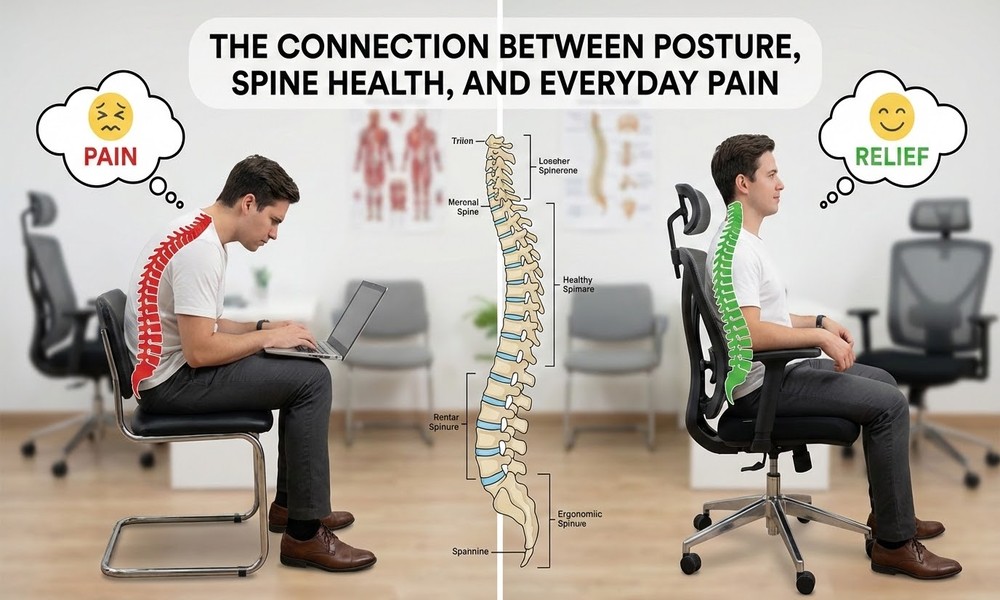
Posture is one of those things most people do not think about until something starts to hurt. Maybe it is a stiff neck after a long day at the desk, a sore lower back after driving, or tight shoulders that seem to appear out of nowhere. These everyday aches can feel unrelated, but they often share a common cause: how we hold our bodies throughout the day.
The spine plays a central role in nearly every movement we make. When posture is aligned, the body works more efficiently and with less strain. When it is not, small imbalances can build over time and lead to ongoing pain. Understanding the connection between posture and spine health is a practical step toward easing discomfort and supporting overall well-being.
How the Spine Supports the Body
The spine is more than a stack of bones. It is a dynamic structure made up of vertebrae, discs, nerves, and supporting muscles that work together to keep the body upright, stable, and mobile. Its natural curves help distribute weight and absorb shock, allowing us to stand, walk, bend, and twist with less risk of injury.
When posture is neutral, those curves stay supported, and the spine can handle daily stress more effectively. Muscles share the workload evenly, and joints move the way they are meant to. That balance helps reduce wear and tear on spinal structures and lowers the risk of strain.
Problems often begin when posture shifts away from neutral alignment. Slouching, leaning forward, or over-arching the back can place uneven pressure on certain areas of the spine. Over time, that added stress can contribute to muscle fatigue, joint irritation, and even structural changes.
The Link Between Posture and Chronic Pain
Chronic pain is often complex, but posture can play a major role in how it develops and lingers. When the body is out of alignment, some areas are placed under constant stress. That can irritate nerves, strain muscles, and compress joints.
Lower back pain is one of the most common examples. Sitting for long periods with poor posture can flatten the spine’s natural curve and place added pressure on discs and surrounding tissues. Poor upper body posture can also create tension in the neck and shoulders, sometimes leading to headaches or reduced mobility.
For people dealing with ongoing discomfort, an evaluation by an orthopedic spine specialist, such as CalSpine MD, may help identify structural issues and guide the next steps in treatment. Understanding the root cause is an important part of finding lasting relief rather than relying on temporary fixes.
What Happens When Posture Breaks Down
Poor posture does not usually cause immediate pain. More often, it builds gradually. Sitting hunched over a laptop or looking down at a phone for hours creates small imbalances that add up throughout the day. Muscles that should be active can become weak, while others grow tight and overworked.
That imbalance leads to inefficient movement patterns. For example, when the shoulders round forward, the neck often shifts in front of the body. This increases the load on the cervical spine and forces surrounding muscles to work harder just to keep the head upright.
Over time, these patterns can lead to chronic discomfort. People may notice recurring headaches, stiffness, or soreness that does not seem tied to a specific injury. In many cases, posture is a contributing factor that goes unnoticed.
Everyday Habits That Affect Alignment
Posture is not just about how you sit or stand. It is shaped by daily habits that often slip under the radar. The way you sleep, carry bags, use devices, and even walk can all affect spinal alignment.
For example, regularly carrying a heavy bag on one shoulder can gradually pull the spine out of balance. Sleeping without enough support can leave the neck in an awkward position for hours. Even habits like crossing your legs while sitting can shift the pelvis and affect posture over time.
Routine health evaluations can help catch these patterns early. Clinics like Grand Forks Clinic may assess posture and musculoskeletal health during general checkups, offering guidance before minor issues turn into more serious problems.
The Role of Muscles in Supporting Posture
Muscles play a major role in maintaining posture. The core, back, hips, and legs all help keep the spine stable and aligned. When these muscle groups are strong and balanced, good posture becomes much easier to maintain.
Modern lifestyles, though, often encourage muscle imbalances. Sitting for long periods can weaken the core and glutes while tightening the hip flexors. That combination can pull the body out of alignment and make proper posture harder to sustain.
Improving strength and flexibility can significantly reduce strain on the spine. Simple exercises, regular movement, and more mindful positioning throughout the day can help restore balance and support healthier posture over time.
Mobility Challenges and Daily Support
For some people, maintaining proper posture is not just a matter of habit. Physical limitations can also make it harder to move comfortably or stay aligned throughout the day. Aging, injury, and chronic conditions can all play a role.
In these situations, daily support can make a real difference. Help with movement, positioning, and routine activities may reduce strain and prevent further discomfort. Services like those provided by Colorado’s Alpenglow Homecare focus on helping individuals maintain mobility while lowering the risk of posture-related pain.
Support does not always mean intensive care. Sometimes it comes down to small adjustments, such as ergonomic setups, guided movement, or help with daily tasks that might otherwise put stress on the body.
Small Changes That Make a Big Difference
Improving posture does not require dramatic changes. Small, consistent adjustments can make a meaningful difference over time. Sitting with your feet flat on the floor, keeping screens at eye level, and taking regular breaks from sitting can all help support better alignment.
Awareness is a strong first step. Many people do not realize how often they slip into poor posture throughout the day. Setting reminders to check alignment or adding short stretches into a daily routine can gradually improve those habits.
Over time, these small changes can reduce strain on the spine, improve comfort, and lower the risk of chronic pain. The goal is not perfection. It is consistency and greater awareness in everyday movement.
Posture, Performance, and Overall Health
Posture does not just affect pain. It also influences overall physical performance. When the body is aligned, movement tends to be more efficient. Breathing can improve, circulation is better supported, and energy may be used more effectively.
Poor posture, by contrast, can limit performance. It may reduce lung capacity, restrict movement, and lead to faster fatigue. That matters for anyone focused on fitness, work productivity, or staying active over the long term.
Health-focused clinics like EverestMensHealth.com often address posture as part of broader physical wellness because of its connection to strength, endurance, and long-term health.
Conclusion
Posture, spine health, and everyday pain are closely connected. What seem like minor habits can have a lasting effect on how the body feels and functions. By understanding how posture affects the spine, it becomes easier to recognize possible sources of discomfort and take steps to improve them.
Maintaining good posture is not about rigid rules. It is about supporting the body in a way that allows it to move more efficiently and comfortably. With attention to daily habits, muscle balance, and overall alignment, it is possible to reduce pain and improve quality of life over time.