
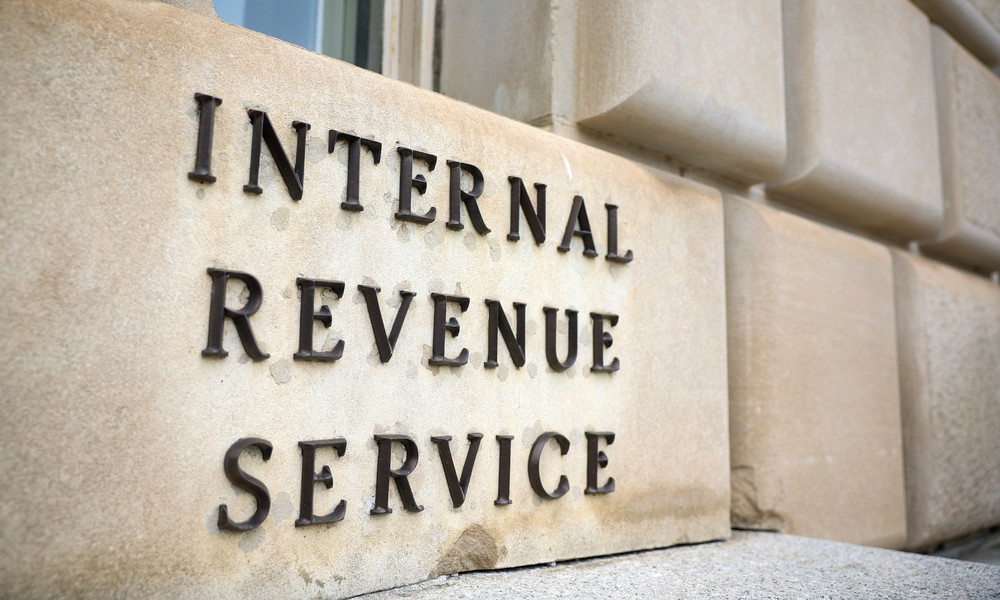
The Internal Revenue Service has a substantial and operationally distinctive presence in New York City. The IRS Large Business and International Division – which handles tax compliance for the country’s largest corporations, partnerships, and high-net-worth individuals with international tax obligations – has significant examination staffing in Manhattan, where proximity to the financial industry, accounting firms, and legal counsel representing major taxpayers shapes both the work and the workforce. The IRS Independent Office of Appeals maintains operations in New York handling tax disputes for one of the most active IRS enforcement regions in the country. And IRS field offices across the boroughs and surrounding counties serve the general compliance function for a metropolitan area whose sheer population produces extraordinary case volume. When employment disputes arise across this workforce – proposed adverse actions, EEO complaints, discipline connected to taxpayer data access – the legal framework is the same as everywhere else in the federal government, but the operational context is distinctly New York. Any New York Federal employee attorney handling IRS employment cases needs both the standard federal employment law foundation and specific familiarity with how the IRS functions and workforce characteristics present in New York City generate specific dispute patterns.
The NTEU-IRS Relationship in New York: What the CBA Provides Here
The National Treasury Employees Union represents most GS-level IRS employees in bargaining unit positions, including most of the LB&I examination workforce, Appeals Officers, and field office staff across the New York metro area. NTEU’s master agreement with the IRS establishes working condition protections, progressive discipline requirements, grievance timelines, and arbitration rights that are substantively similar nationwide but whose application reflects the density of NTEU chapter activity in New York.
NTEU has historically maintained well-staffed chapter operations in the New York metropolitan area given the size of the IRS workforce here. The practical consequence is that NTEU representation for New York City IRS employees tends to be more resourced than in smaller IRS locations – chapter representatives with substantial experience in the arbitration system, institutional memory about how management at specific New York IRS offices has handled various disputes, and familiarity with the particular arbitrators regularly selected under the national agreement for New York-area cases.
That institutional capacity matters, but it doesn’t change the fundamental election question that applies to every NTEU-covered IRS employee who receives a proposed adverse action. The choice between the negotiated grievance procedure and an MSPB appeal is still a threshold election that shapes the entire subsequent litigation landscape, and it must be made with analysis of the specific case rather than with any assumption that either forum is automatically preferable. For IRS employees in New York whose adverse action involves discrimination or retaliation claims – and a significant share of New York IRS adverse actions do – the MSPB’s ability to adjudicate those statutory claims may provide a more complete proceeding than arbitration, for the same reasons discussed in the Dallas companion to this post and in the SSA analysis elsewhere in this series.
LB&I Audit: Why the Professional Judgment Environment Generates Specific Disputes
The Large Business and International Division workforce in Manhattan occupies professional positions that require significant independent technical judgment – analyzing complex corporate structures, evaluating transfer pricing arrangements, assessing financial products transactions, applying international tax treaty provisions, and building examination strategies for taxpayers whose affairs involve multiple countries and layers of complexity. The relationship between LB&I examiners and their supervisors involves professional disagreements about case strategy and audit conclusions that have no equivalent in a field office setting where individual returns are processed against more defined standards.
This professional judgment environment creates a specific pattern of employment disputes that New York IRS employees in LB&I experience with some regularity. A Revenue Agent who reaches a different technical conclusion about a tax position than management prefers, who believes a proposed settlement is inadequate and advocates for a different approach, or who documents concerns about the sufficiency of an examination may find that professional disagreement surfaces in subsequent performance evaluations as “failure to meet professional standards,” “lack of teamwork,” or “inability to accept supervisory feedback.” These characterizations are the textbook retaliation framing – taking an employee’s legitimate professional position on a substantive work question and recharacterizing it as a performance or conduct deficiency.
For LB&I employees in New York who believe their performance documentation reflects retaliation for professional positions taken on examination strategy or case conclusions, the EEO complaint and MSPB appeal analysis is the same as for any retaliation claim – the temporal relationship between the protected activity and the changed performance documentation, and the comparison between how the examiner’s work was characterized before and after the professional disagreement, form the foundation of the retaliation record.
Appeals Officers in New York: Independence, Pressure, and Employment Disputes
The IRS Independent Office of Appeals has a significant New York presence handling taxpayer appeals of examination conclusions and collection determinations from one of the most active IRS enforcement areas in the country. Appeals Officers are required by statute to exercise independent judgment and to approach case resolution without regard to the examination outcome – but management pressure on resolution rates and settlement values creates a tension with that independence that shapes the employment environment.
An Appeals Officer who believes a settlement is inadequate, who declines to approve a resolution that management is pushing, or who invokes the independence provisions of Appeals’ governing authority is exercising a statutory right. When adverse consequences follow – negative performance ratings, change in supervisory relationship, exclusion from desirable case assignments – the employment law analysis involves both the retaliation framework and the specific statutory independence provisions that govern Appeals. The connection between an Appeals Officer’s independent case disposition and subsequent adverse treatment is the kind of factual pattern where the temporal record and the supervisory communications surrounding the case resolution decisions are the most critical evidence.
Taxpayer Data Security and § 6103: The IRS-Specific Employment Risk in New York
Federal IRS employees in New York – particularly those in LB&I who have access to large-corporate taxpayer records and those in the Special Enforcement Program and Criminal Investigation units that have presence in the metro area – face the same § 6103 and IDRS access framework that creates specific employment risk at IRS facilities nationwide.
Unauthorized access to taxpayer accounts, improper disclosure of return information, and related conduct are among the most serious charges in the IRS disciplinary framework, and allegations of this nature trigger both the internal disciplinary process and, frequently, a parallel TIGTA investigation. The voluntary/compelled cooperation distinction – and the Kalkines warning framework – is as important for New York IRS employees facing TIGTA interviews as it is for their counterparts in Dallas, and for the same reasons: participating in a TIGTA interview without legal counsel puts both the disciplinary case and any potential criminal exposure at risk simultaneously.
LB&I examiners in New York who have access to highly sensitive taxpayer information about major corporations and high-net-worth individuals face a slightly different risk profile than field office employees – the stakes of a § 6103 allegation involving information from a major corporate examination are higher, and the complexity of the IDRS access records for a multi-year LB&I examination creates more evidentiary complexity in any investigation.
For any New York IRS employee who has been contacted by TIGTA in connection with a taxpayer data access investigation, independent legal counsel before any interview – not after – is the appropriate response. The NTEU chapter representative can accompany an employee to management investigative interviews, but TIGTA investigations are a different context where the dual criminal and civil exposure requires legal representation with specific awareness of that intersection.
What a New York Federal Employee Attorney Should Know About NYC IRS Cases
The NTEU election question, the LB&I professional judgment environment, the Appeals independence framework, and the taxpayer data access dimension all make IRS employment disputes in New York City a specific practice context within federal employment law.
The Mundaca Law Firm represents federal employees throughout New York, including IRS employees at LB&I, Appeals, field offices, and other IRS functions across the New York metropolitan area, in MSPB appeals, EEO complaints, and adverse action defense. If you are an IRS employee in New York who has received a proposed action, whose performance documentation has changed in the aftermath of a professional dispute, or who has been contacted in connection with a TIGTA investigation, contact the firm to schedule a consultation before the election or any interview deadline runs.